
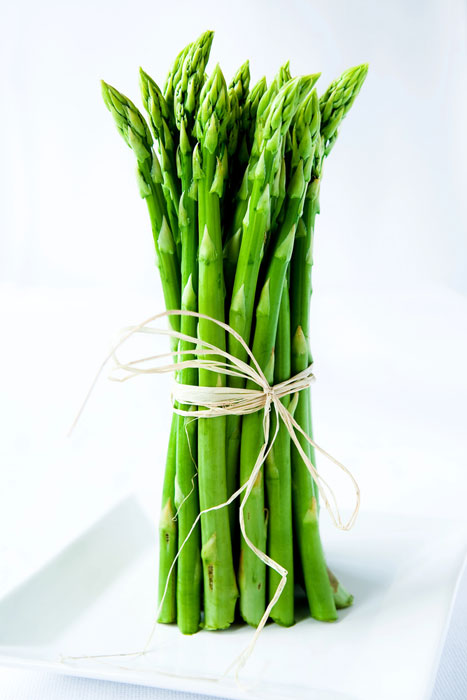
Fresh, tender, and full of delicate flavor, asparagus brings a little taste of spring to the table. Roast it until lightly caramelized, toss it on the grill, or add it to pasta, salads, stir-fries, and grain bowls. Whether it’s the star of a simple side dish or tucked into a favorite recipe, asparagus is a delicious way to bring more vegetables to your plate.
The Health Benefits of Asparagus
Asparagus offers fiber, folate, vitamin K, and other nutrients that make it a welcome addition to plant-forward meals. Folate supports healthy cell growth and helps the body make DNA, while vitamin K contributes to normal blood clotting and bone health. Its fiber supports digestion, and it also provides potassium and plant compounds with antioxidant activity. There’s plenty to appreciate about this spring vegetable without promising a detox or an anti-aging effect. Enjoy it as part of a varied, nourishing diet.
How To Buy Asparagus
Look for firm spears with tightly closed tips and fresh, moist cut ends. Pass on bunches that look limp or shriveled or have mushy tips. Both thin and thick spears can be tender—freshness matters more than size. Choose a bunch with spears of similar thickness so they’ll cook evenly.
How To Store Asparagus
Keep asparagus in the refrigerator and enjoy it within a few days for the best flavor and texture. To help it stay fresh, trim the bottoms and stand the spears upright in a jar with about an inch of water. Loosely cover the tops with a plastic bag, and change the water if it becomes cloudy. This simple method helps keep the spears from drying out until you’re ready to cook.
How To Prepare Asparagus
Rinse the spears under cool running water, then trim away the tough, woody ends. You can also gently bend a spear near the bottom until it snaps, although trimming with a knife usually means less waste. For a fresh, crisp addition to salads, shave raw asparagus lengthwise with a vegetable peeler or slice it thinly at an angle.
To enjoy it cooked, place asparagus in a steamer basket over simmering water, cover, and steam until bright green and crisp-tender. Start checking after about 3 minutes; thicker spears may need a little longer. You can also sauté it in a little extra virgin olive oil or roast it for a richer flavor. Finish with a squeeze of lemon, and let that lovely asparagus flavor shine.
More Facts About Asparagus
Did you know asparagus also comes in white? White asparagus is grown without exposure to sunlight, which prevents it from developing its familiar green color. Its mild flavor makes it a lovely change of pace. The outer stalks generally need peeling before cooking, so give them a little extra attention before bringing them to the table.
Looking for more plant-forward basics? Visit our Nutrition Guide.