
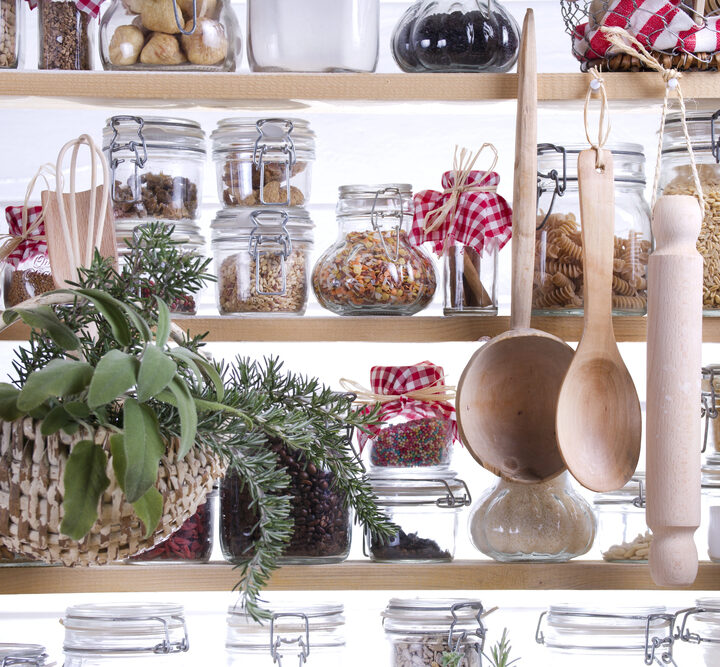
A well-stocked pantry is the foundation of simple, nourishing meals. With a few staple ingredients nearby, you can create balanced, plant-forward dishes without overthinking dinner.
Best of all, you don’t need to stock everything at once. Instead, choose the foods you use most often and build your pantry over time. Below are some pantry staples to consider.
Grains:
Grains provide carbohydrates, fiber, vitamins, minerals, and other important nutrients. In particular, whole grains can be a nutritious foundation for plant-forward meals.
For best results, buy grains in amounts you’ll use and keep them in tightly sealed containers. Then, store them in a cool, dry cupboard.
Options to keep on hand:
- Barley
- Cornmeal
- Kasha
- Rolled oats
- Orzo
- Pasta, in various grains and shapes
- Quinoa
- Rice — brown, white, or basmati
- Unbleached all-purpose flour
- Whole wheat pastry flour
Legumes:
Beans, lentils, and split peas are pantry powerhouses. For example, they provide plant protein, fiber, minerals, and other important nutrients.
Both dried and canned varieties work well. Therefore, choose whichever options make plant-forward cooking easier for you.
Options to keep on hand:
- Black beans
- Cannellini beans
- Garbanzo beans
- Kidney beans
- Pinto beans
- Lentils
- Split peas
Fresh Fruits and Vegetables:
Fresh fruits and vegetables add color, flavor, texture, fiber, vitamins, and minerals to your meals.
However, different types of produce have different storage needs. Buying reasonable amounts can also help you enjoy your produce while it’s still fresh.
Options to keep on hand: apples, oranges, bananas, grapes, mangos, avocados, cherries, and pears.
Dried Fruits:
Dried fruit offers a convenient way to keep fruit in the pantry. However, drying removes much of the water. As a result, the natural sugars and calories become more concentrated by volume.
For that reason, a smaller portion may be more satisfying than you expect.
Store dried fruit in an airtight container in a cool, dark place.
Options to keep on hand: Dried apricots, cranberries, figs, mangoes, prunes, raisins, and sun-dried tomatoes.
Sea Vegetables:
People have enjoyed sea vegetables for centuries. They can add distinctive flavor, texture, fiber, and minerals to plant-forward dishes.
For example, kombu is traditionally used to make flavorful broth and can be added to a pot of beans. Meanwhile, you can rehydrate wakame and use it in salads, soups, and other dishes.
Nori is best known for sushi. However, you can also cut the sheets into strips and add them to soups, rice bowls, and salads.
Options to keep on hand: Dulse, hijiki, kombu (kelp), nori, and wakame.
Soy Foods:
Soy foods can provide protein and other valuable nutrients in a plant-forward diet. For example, tofu and tempeh are versatile ingredients for everything from stir-fries to sandwiches.
Soy milk can also be a nutritious dairy-free option. When choosing a plant milk, compare labels for protein, added sugar, calcium, and vitamin D.
Options to keep on hand: Soy milk, miso (light or dark), tamari, tempeh, and tofu.
Nuts and Seeds:
Nuts and seeds provide healthy fats, plant protein, fiber, vitamins, and minerals. Additionally, they add wonderful flavor and texture to both savory and sweet dishes.
Nut and seed butters offer another convenient option. When possible, look for varieties made primarily from the nut or seed, with little or no added sugar.
After opening natural nut or seed butter, follow the manufacturer’s storage instructions.
Options to keep on hand:
- Almonds
- Almond butter
- Flaxseeds
- Peanut butter
- Pecans
- Pine nuts
- Pumpkin seeds
- Sesame butter (tahini)
- Sesame seeds
- Walnuts
Cooking Oils:
Different oils work well for different types of cooking. Extra-virgin olive oil, for example, is a versatile choice for dressings, sautéing, and many everyday dishes.
Avocado oil can also work well for cooking. Coconut oil, meanwhile, has a distinctive flavor and contains considerably more saturated fat than olive or avocado oil.
Rather than thinking of one oil as perfect for every purpose, choose an oil that suits the recipe and cooking method.
Options to keep on hand:
- Extra-virgin olive oil
- Olive oil
- Avocado oil
- Sesame oil
- Unrefined virgin coconut oil (tastes like coconut)
- Refined coconut oil (does not taste like coconut)
Dried Herbs and Spices:
Amazing things happen when you add herbs and spices to your cooking. In fact, they’re one of the easiest ways to build flavor without complicating a recipe.
Dried herbs generally have a more concentrated flavor than fresh herbs. Therefore, recipes often add them earlier in the cooking process.
Fresh herbs, on the other hand, often work beautifully toward the end of cooking.
Options to keep on hand:
- Allspice
- Basil
- Bay leaves
- Caraway seeds
- Cardamom
- Chili flakes
- Cinnamon
- Cloves
- Coriander
- Cumin
- Curry powder
- Dill
- Granulated garlic
- Ground ginger
- Italian seasoning
- Kosher salt
- Onion powder
- Oregano
- Nutmeg
- Paprika
- Black pepper
- Cayenne pepper
- Rosemary
- Sage
- Himalayan salt
- Tarragon
- Thyme
- Turmeric
Finally, keep dried herbs and spices away from heat, moisture, and direct light. Although storing them above the stove may be convenient, another cupboard is usually a better choice.
Vinegars:
Vinegar adds acidity and brightness to everything from salad dressings to marinades and sauces. As a result, keeping several varieties nearby can make everyday cooking much more interesting.
Different vinegars bring different flavors. Apple cider vinegar is fruity and tangy, while balsamic vinegar adds a richer sweetness.
Options to keep on hand:
- Apple cider vinegar
- Balsamic vinegar
- Brown rice vinegar
- Raspberry vinegar
- Red wine vinegar
- Umeboshi plum vinegar
- White wine vinegar
Sweeteners:
A few sweeteners in the pantry come in handy for baking, sauces, dressings, oatmeal, and other recipes. However, all added sugars are best enjoyed in moderation.
Instead of searching for one “perfect” sweetener, choose the one that gives your recipe the flavor and texture it needs.
Options to keep on hand:
- Blackstrap molasses
- Brown rice syrup
- Maple syrup
- Organic granulated sugar
- Turbinado sugar
Honey is another common sweetener. However, because bees produce honey, people following a vegan diet generally choose plant-based alternatives instead.
Wines and Spirits for Cooking:
Wine and other spirits can add depth and flavor to certain recipes. For example, you might use wine in sauces, stews, risotto, or pasta dishes.
However, cooking doesn’t always remove all the alcohol. The amount remaining depends on factors such as cooking time, temperature, and preparation method.
If you prefer to cook without alcohol, broth, juice, vinegar, or other recipe-specific substitutes may work instead.
Options to keep on hand:
- Brandy
- Dry sherry
- Marsala
- Mirin
- Port
- Red wine, such as Merlot or Cabernet Sauvignon
- Rum
- Vermouth
- White wine, such as Chardonnay or Sauvignon Blanc
Condiments and More:
Condiments can turn simple ingredients into flavorful meals in minutes. As a result, stocking a few favorites can make quick lunches and dinners much easier.
There’s no need to own every variety. Instead, choose the flavors you and your family actually enjoy.
Options to keep on hand:
- Capers
- Ketchup
- Mango chutney
- Mustard
- Pickled jalapeños
- Prepared horseradish
- Salsa
- Vegan mayonnaise
Convenience Foods:
Some days, you need dinner on the table quickly. Fortunately, a thoughtfully stocked pantry can make those days much easier.
Convenience foods don’t have to mean highly processed meals. For example, canned beans, tomatoes, whole-grain bread, and tortillas can become the foundation of a quick, satisfying meal.
Options to keep on hand:
- Canned beans, such as black, garbanzo, kidney, and red beans
- Fruit preserves
- Granola and whole-grain cereals
- Olives
- Pickles
- Whole-grain crackers
- Canned tomatoes
- Tomato paste
- Tortillas
- Whole-grain bread
Foods to store at Room Temperature:
Vegetables: Onions, shallots, garlic, potatoes, sweet potatoes, and winter squash.
Fruits: Apples, avocados, bananas, citrus fruits, mangoes, papayas, pears, pineapple, and melons.
Foods to store in the Refrigerator:
Vegetables: Artichokes, asparagus, carrots, celery, green beans, salad greens, broccoli, cabbage, cauliflower, beets, rutabagas, green onions, ginger, chilies, parsley, cilantro, eggplant, zucchini, and other summer squash.
Storage needs can vary for certain produce, especially fresh herbs and fruits. Therefore, use these lists as general pantry guidelines rather than strict rules.
Fruits: Strawberries, blueberries, and figs.
Don’t Forget the Freezer:
Frozen vegetables are another convenient option. For example, green beans, corn, diced carrots, and green peas work well in soups, stews, entrées, and quick side dishes.
Because frozen produce keeps much longer than fresh produce, it’s especially useful for busy days.
Build the Pantry That Works for You:
A well-stocked pantry isn’t about having everything. Instead, it’s about keeping enough of the right ingredients around to make nourishing meals feel easy.
Start with the foods you use most often. Then, gradually add new grains, beans, spices, condiments, and other staples as you discover what works for you.
Most importantly, make your pantry your own. With a handful of reliable ingredients nearby, a simple and satisfying plant-forward meal is never far away.