
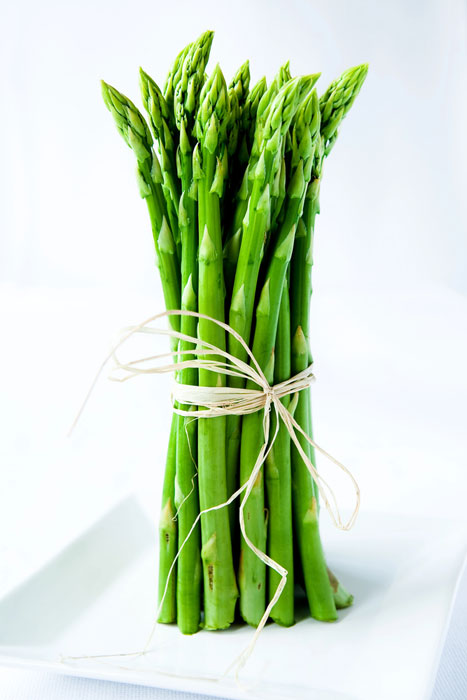
Fresh, tender, and full of delicate flavor, asparagus is a delightful addition to plant-based cooking. Asparagus can be roasted, grilled, steamed, or added to pasta dishes, salads, stir-fries, and grain bowls. With its crisp texture and vibrant taste, asparagus brings a light, wholesome touch to a variety of meals.
The Health Benefits of Asparagus
Asparagus is a member of the lily family and contains the most folate of any vegetable. Folate helps rid the body of the amino acid homocysteine, which is associated with cardiovascular disease. It acts as a natural diuretic, flushing toxins through the kidneys. It provides high levels of glutathione, an antioxidant that protects the liver, binding to toxins and eliminating them. The stalk is full of vitamin A, potassium, and selenium. It’s an excellent source of vitamins C and K. If you’re in the market for a natural anti-ager, you may have found it—the high levels of glutathione in asparagus help minimize skin damage from sun exposure. It protects and repairs DNA and promotes healthy cell replication.
How To Buy Asparagus
Look for firm spears with tightly closed heads. The base should be well hydrated. Thin speared asparagus is more tender because they are younger.
How To Store Asparagus
Store your asparagus in the refrigerator. Tightly wrap the spears in plastic wrap to keep them from drying out, or stand them upright in a small amount of water, then cover them with plastic wrap. This method should help them last several days until you are ready to use them.
How To Prepare Asparagus
Hold the spear loosely and snap off the bottom. The spear will naturally break where it becomes tough. You can eat raw asparagus by shaving it lengthwise with a vegetable peeler or thinly slicing it at an angle. Toss it into a salad if desired. The nutrients are not compromised during the cooking process, however. To enjoy asparagus cooked, cover and steam it in a basket or colander over simmering water until it turns bright green and is crisp-tender, about 5 minutes. You can also sauté asparagus in a little extra virgin olive oil or butter for a delicious alternative to steaming.
More Facts About Asparagus
Did you know there is such a thing as mild white asparagus? It lacks green color because, when the plant emerges from the soil in the spring, its shoots are shielded from light, stalling photosynthesis. Nutritionally, you’re better off sticking with green asparagus.
Looking for more plant-based basics? Visit our Nutrition Guide.