
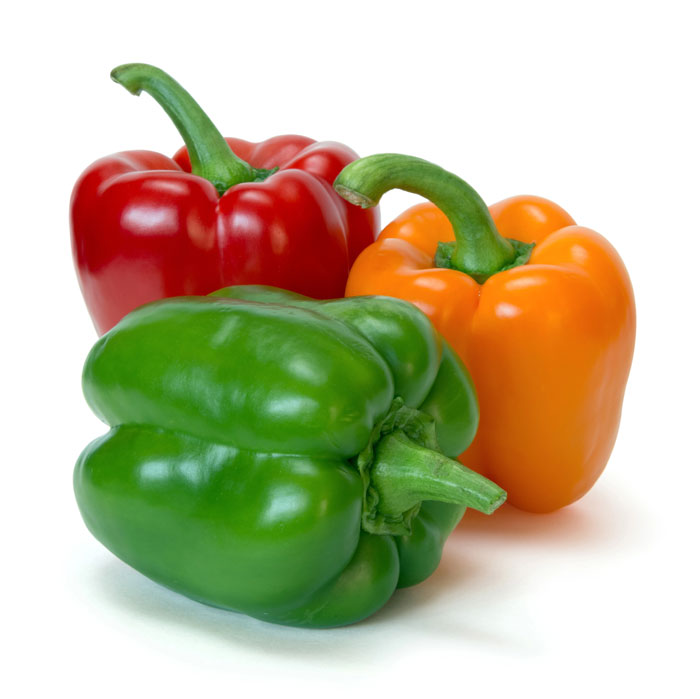
Colorful, crisp, and full of bright flavor, bell peppers are a lively addition to plant-based cooking. They can be roasted, sautéed, stuffed, blended into sauces, or enjoyed fresh in salads and wraps. With their natural sweetness and crunch, bell peppers add freshness, texture, and beauty to a wide range of plant-based meals.
Health Benefits of Bell Peppers
Just one small red, yellow, or orange bell pepper will provide you with up to three times your daily requirement of vitamin C; Peppers also provide vitamin B6, another immune-supporting nutrient.
How to Buy Bell Peppers
Look for firm peppers with taut skin, free of wrinkles or cracks. Peppers with thick walls are juicier and feel heavier for their size. Peppers generally rank high on the “Dirty Dozen” list of pesticide-laden vegetables, so buy organic peppers whenever possible.
How to Store Bell Peppers
Refrigerate in a paper bag in the vegetable drawer of your refrigerator for up to five days. Peppers can also be frozen for later use in soups, stews, and sauces. To freeze peppers, remove the stems and seeds, dice the peppers to the desired size and shape, then freeze them in a single layer on a baking sheet before transferring them to a freezer bag. Note: Previously frozen bell peppers are best for cooking.
How to Prepare Bell Peppers
Roasted peppers in your fridge are like money in the bank. You can use them in salads, dips, pasta, and soups. They have endless possibilities. To roast, place peppers directly over a gas flame and cook, turning with tongs until charred on all sides. You can also roast them in the oven under a broiler. Transfer the peppers to a bowl and cover with plastic wrap until they are cool enough to handle. Rub the charred skin off with a paper towel. Refrigerate until ready to use. You can also use them raw in salads or on their own. Just remove the stem and seeds, and slice or dice them to your liking.
How Bell Peppers Get Their Color
Red, yellow, and orange peppers start out green. The color and taste change as they ripen on the vine. It’s this extra time in the sun that gives them their bright colors. Colored peppers are often more expensive than their green counterparts.
How to Grow Bell Peppers
Did you know you can grow your own bell peppers simply by using the seeds you find inside a bell pepper? It is best to use seeds from a fully ripened red, orange, or yellow bell pepper because they are more mature. You can plant the seeds immediately or let them dry for a few days for better germination.
Looking for more plant-based basics? Visit our Nutrition Guide.