
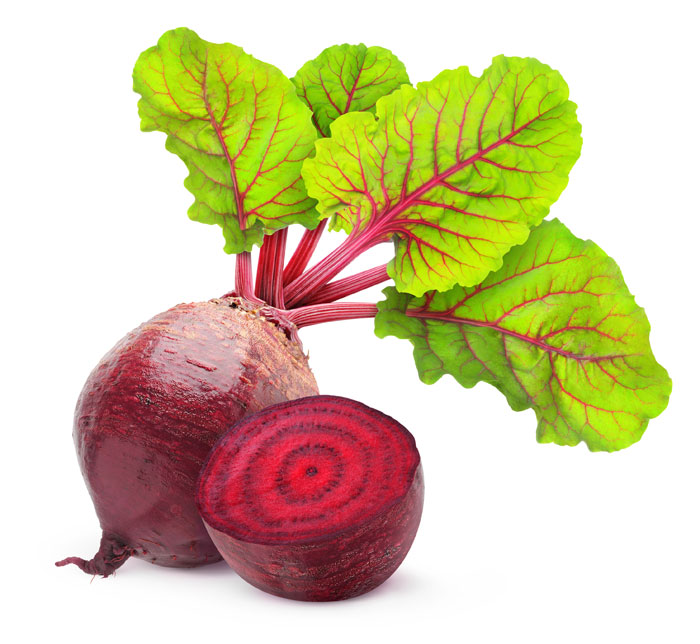
Earthy, vibrant, and naturally sweet, beets bring bold color and rich flavor to plant-based cooking. They can be roasted, blended into smoothies, added to salads, turned into dips, or enjoyed in soups and grain bowls. With their deep, earthy flavor and beautiful hue, beets add warmth, nourishment, and a wholesome touch to a variety of meals.
The Health Benefits of Beets
Beets are low in calories, high in fiber, and rich in iron. They are full of cancer-fighting beta-carotene and folic acid, which can help prevent congenital disabilities. Fresh beets are more nutritious and have less sugar and sodium than canned beets, so if possible, choose the fresh option here. The leafy greens of a beet plant are more nutritious than the roots, with twice the potassium, folic acid, calcium, and iron. Beets support blood flow through high concentrations of nitrates, which the body converts into nitric oxide. This compound relaxes blood vessels, improves circulation, and can significantly reduce blood pressure. Improved blood flow extends to the muscles, improving athletic endurance, and to the brain, supporting cognitive function.
How To Buy Beets
At farmers’ markets and gourmet grocers, you’ll most likely find golden, white, and striped beets, along with the more common red beets. No matter the variety, look for firm beets with fresh-looking greens. Choosing a uniformly sized bunch will ensure they cook in the same amount of time if you plan to cook them whole. Small to medium-sized beets are generally more tender than larger beets.
How To Store Beets
Leave about an inch of stem attached to the root, and cut away the greens. Refrigerate the beets and greens in separate plastic bags if storing. The beets will last at least a month, but you should use the greens within 3 to 4 days.
How To Prepare Beets
Preparing beets can be a bit messy—they might permanently stain your clothing and cutting board, and temporarily stain your fingers —but we think they’re worth it! Roasting or steaming them with their skins on will help to keep the color from leaching out. The skins will slip off easily once cooked. To roast, trim both ends and drizzle with olive oil. Add a sprinkling of salt and pepper and wrap tightly, either together or separately, in foil. Roast at 400° until tender, 45 to 60 minutes, depending on the size of your beets. Allow to cool slightly, then rub off the skins with a paper towel. (Rubber gloves work great for this. Next, if using the beet greens, wash them in cold water, then dry them completely. You can chop and freeze them for later use in soups and stews, or prepare them as you would Swiss chard, sautéing the fresh chopped stems and leaves in extra-virgin olive oil with a little (or a lot) of minced garlic.
Looking for more plant-based basics? Visit our Nutrition Guide.