What is Rhubarb?
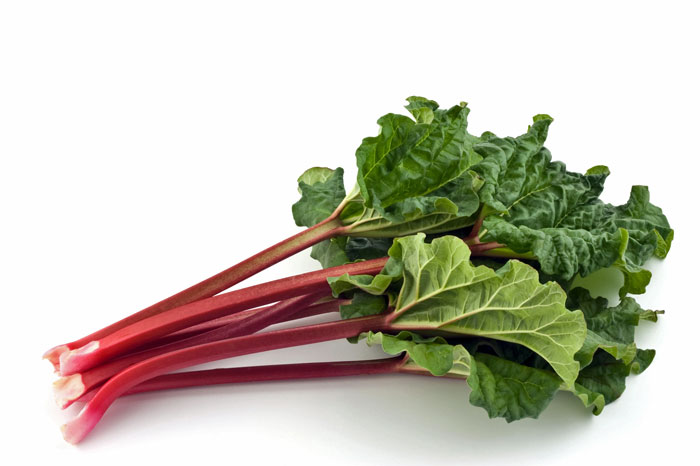
Rhubarb is a hardy perennial vegetable known for its long, fleshy, tart green or red stalks.
The Health Benefits of Rhubarb
Rhubarb contains nine percent of the daily recommended amount of calcium in a 3.5-ounce serving and 5g of fiber. It is also high in vitamin K, essential for strong bones, as well as vitamin C, iron, and manganese. Unfortunately, its health benefits are sometimes outweighed by the amount of sugar often used to sweeten this tart and sometimes bitter vegetable; however, it is still a favorite among many.
How to Buy Rhubarb
Look for stalks that are plump, crisp, and firm. Green stalks are older and milder, while red stalks are generally younger and have a stronger flavor, ideal for cooking. Check that the leaves are bright green and perky if still attached. Some grocers will remove the leaves because you can’t eat them.
How to Store Rhubarb
Store fresh rhubarb in plastic wrap in the refrigerator. Don’t wash it until you’re ready to use it. Rhubarb will keep for up to a week if stored carefully. You can also freeze rhubarb by washing it, cutting it into 1-inch pieces, and placing it in an airtight freezer bag. Rhubarb can stay frozen for up to 12 months.
How to Prepare Rhubarb
Remove and discard all of the leaves, then rinse with cold water and pat dry. Cut the tough ends off the bottom and remove any dried/damaged parts on the skin with a paring knife or vegetable peeler. You can cut them into 1-inch pieces and add them (about 6 cups) to a pot with about 1 cup of water and 1/4 cup of sugar. Or follow your favorite recipe for baking a pie, cake, crisp, or similar.
Little-Known Facts About Rhubarb
The rhubarb roots of some species were used in medicine long before they were introduced as food. Although rhubarb is a vegetable, it’s most often cooked similarly to a fruit. The stalks can range from crimson red to speckled light pink to light green.
Can You Eat Rhubarb Leaves?
No. Rhubarb leaves contain high levels of oxalic acid and anthrone glycosides, making them inedible. Consuming the leaves could cause severe illness, kidney failure, and even death if consumed in large quantities.
Looking for more plant-based basics? Visit our Nutrition Guide.