Legumes are a class of vegetables that bear their fruit in pods. They are incredibly healthy foods essential for maintaining a healthy plant-based diet.
Legumes are among the most versatile and nutritious foods available. They are typically low in fat, cholesterol-free, and high in folate, potassium, iron, and magnesium.
Legumes are also an excellent source of protein and contain beneficial fats, as well as soluble and insoluble fiber.
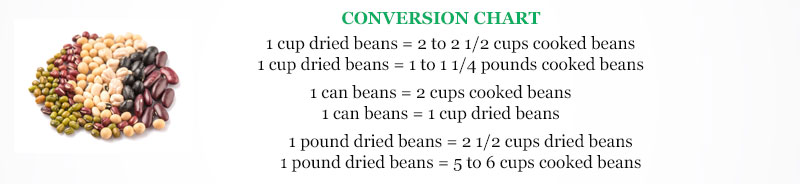
Read on for additional information on storing, preparing, cooking, and conversions.
Legumes are made up of the following:
- Beans
- Nuts
- Peas
- Lentils
Legumes are rich in the following nutrients:
- Calcium
- Dietary Fiber
- Folate
- Iron
- Magnesium
- Phosphorus
- Potassium
- Protein
- Riboflavin
- Thiamin
- Vitamin B6
- Zinc
Meet the Legume Family:
Beans:
Adzuki Beans, Black Beans, Soybeans, Anasazi Beans, Fava Beans, Garbanzo Beans (chickpeas), Kidney Beans, and Lima Beans.
Nuts:
Peanuts, Soy Nuts, and Carob Nuts.
Peas:
Green Peas, Snow Peas, Snap Peas, Split Peas, and Black-Eyed Peas.
Lentils:
Yellow, Orange, Green, Brown, or Black Lentils.
How to store legumes:
Store all legumes in a cool, dry place. Never store dried or uncooked legumes in the refrigerator. Refrigerate prepared/cooked legumes only.
How to prepare legumes:
Pick through the dried beans and discard any discolored or shriveled beans, as well as any foreign matter. Soak dried beans and legumes, except for black-eyed peas and lentils, in room-temperature water. Soaking will rehydrate them, so they cook more evenly.
Choose any of the soaking methods below, depending on the amount of time you have to prepare them:
How to slow soak your legumes:
Using a stockpot, cover 1 pound of dried beans with 10 cups of water. Cover and refrigerate for 6 to 8 hours or overnight.
How to hot soak your legumes:
Using a stockpot, bring 10 cups of water to a boil. Add 1 pound of dried beans and return to a boil. Remove from heat, cover tightly, and set aside at room temperature for 2 to 3 hours.
How to quickly soak your legumes:
Using a stockpot, bring 10 cups of water to a boil. Add 1 pound of dried beans and return to a boil. Boil 2 to 3 minutes. Remove from heat, cover, and set aside at room temperature for 1 hour.
How to soak your legumes so they’re (almost) gas-free:
Using a stockpot, place 1 pound of beans in 10 or more cups of boiling water. Boil for 2 to 3 minutes. Remove from heat, cover, and set aside overnight. The next day, 80 to 90 percent of the indigestible sugars that cause gas will have dissolved into the soaking water. Strain, rinse, and replace the pot with fresh water.
Cooking tips for preparing the best legumes:
After soaking, drain and rinse the beans, then add them to a stockpot. Cover the beans with three times their volume of water. Add onion, garlic, herbs, or spices as desired, and bring to a boil. Reduce the heat to medium-low and simmer gently, stirring occasionally, until tender. The cooking time will vary depending on the type of bean. Start checking them after about 45 minutes. Add additional water if needed.
Other tips for preparing the best legumes:
Add salt, vegetables, or other acidic ingredients, such as vinegar, tomatoes, or juice, near the end of the cooking process when the beans are tender; if added too early, they can make the beans tough.
The beans are fully cooked when you can easily mash them between two fingers or with a fork.
Freeze cooked beans for later use by immersing them in cold water until cool. Drain well, then freeze.
If you purchase canned beans, read the label to ensure they were prepared using vegetable broth or water, and not chicken or beef broth, as many of the more popular brands are.
Including various legumes in your diet will help your body get the nutrients it needs to stay healthy.