
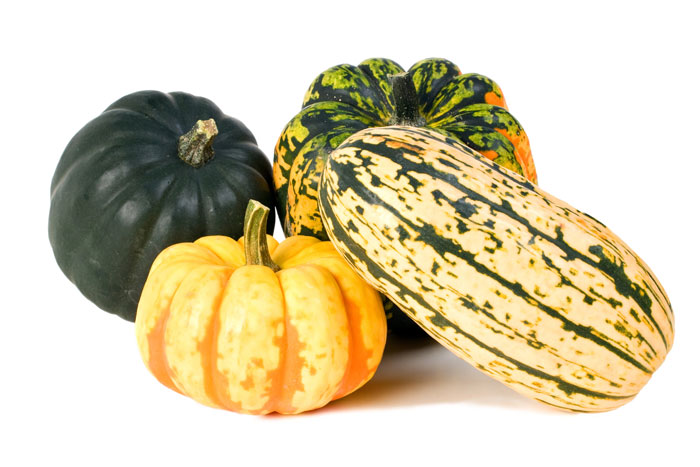
Winter squash comes in a range of wacky shapes, colors, and textures. From blue-gray kabocha squash to the elongated spaghetti squash. They are delicious, easy to prepare, and packed with an army of powerful nutrients.
The Health Benefits of Winter Squash
Winter squash get their antioxidant and anti-inflammatory properties from beta-carotene, which is converted to vitamin A and a high level of vitamin C. In addition, they are an excellent source of potassium (good for bone health), vitamin B6 (a boost for the immune and nervous systems), and a ton of fiber, which makes them heart-friendly too.
How to Buy Winter Squash
Look for a squash that is firm and heavy for its size.
How to Store Winter Squash
Store squash in a cool, dry, dark area. They will keep for several months.
How to Prepare Winter Squash
There are several ways to prepare winter squash and a multitude of culinary possibilities. To bake a winter squash, first cut it in half, drizzle the flesh with a bit of olive oil, add a pinch of salt and pepper, and place it cut-side down on a baking sheet. Bake in a 375° oven for 30 to 40 minutes, until you can easily pierce it with a sharp knife.
To roast, use a potato peeler to peel the squash, then cut it into cubes. Place the cubes on a baking sheet and drizzle with olive oil. Season with salt and pepper and roast at 400°F for 30 to 35 minutes or until golden around the edges.
Once cooked, the squash can be mashed, pureed, or folded into pasta or risotto. Herbs such as sage and rosemary are a good match for savory butternut squash, while warming spices like nutmeg and cinnamon pair nicely if the goal is to bring out its sweetness.
Is Winter Squash a Vegetable or a Fruit
Even though most people identify squash with vegetables, from a botanical standpoint, they are considered fruits because they contain the seeds of the plant.
Looking for more plant-based basics? Visit our Nutrition Guide.