
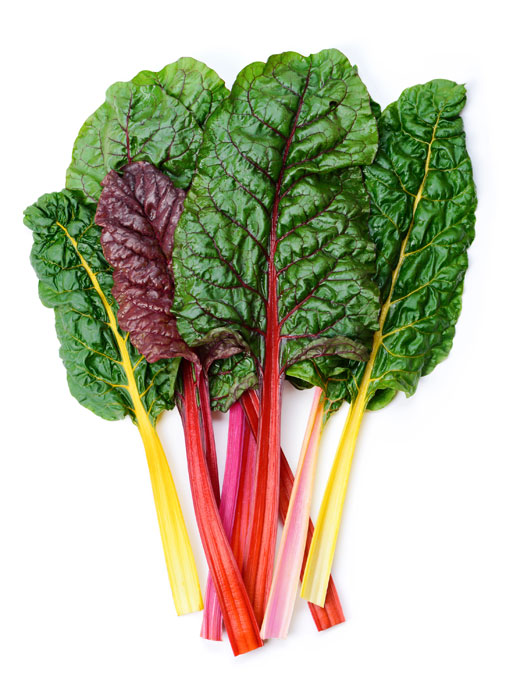
With its vibrant colors, tender leaves, and earthy flavor, Swiss chard is a wonderfully versatile ingredient for plant-based cooking. You can sauté it, add it to soups, blend it into smoothies, toss it into pasta dishes, or enjoy it in fresh salads. Packed with nutrients and easy to prepare, Swiss chard brings both beauty and wholesome flavor to a wide variety of comforting plant-based meals.
The Health Benefits of Swiss Chard
Although called “Swiss” chard, this green hails from Sicily, not Switzerland. Nevertheless, it’s a staple in Mediterranean cuisine. Related to spinach and beets, Swiss chard gives amazing antioxidant protection in the form of carotenoids such as beta-carotene, lutein, and Zeaxanthin, which help maintain healthy eyes and may lower the risk of cataracts. When the body converts the beta-carotene to vitamin A, your vision gets another boost, as well as your immunity and ability to fight some cancers. It’s also high in vitamin C — just one cup of cooked Swiss chard provides about a third of the daily recommended amount.
Other beneficial nutrients in Swiss chard include vitamin B6, vitamin E, vitamin K, potassium, calcium, and magnesium. In addition, the fiber found in chard helps to keep cholesterol levels down, lowering the risk of heart disease.
How to Buy Swiss Chard
There are three types of chard found in stores and at farmers’ markets: Rainbow chard, Fordhook Giant, and Ruby Red (or Rhubarb). Regardless of what type you’re after, always look for crisp, vibrant green leaves. Avoid leaves with small holes or yellow or brown marks.
How to Store Swiss Chard
Rinse the chard lightly in cool water, then refrigerate it between moistened paper towels in a plastic bag. Poke several pinholes or cut small slits into the sides of the bag to allow air to circulate. The chard will keep for two to three days.
How to Prepare Swiss Chard
Both the leaves and stalks are edible. Wash thoroughly and trim just the very ends of the stalk. Chop and sauté the chard stems in a little olive oil first, then add the leaves with one or two minced garlic cloves. Season to taste with salt and pepper and finish with a little fresh lemon juice. Swiss chard can be enjoyed in a variety of ways, but this is one of our favorites!
Looking for more plant-based basics? Visit our Nutrition Guide.