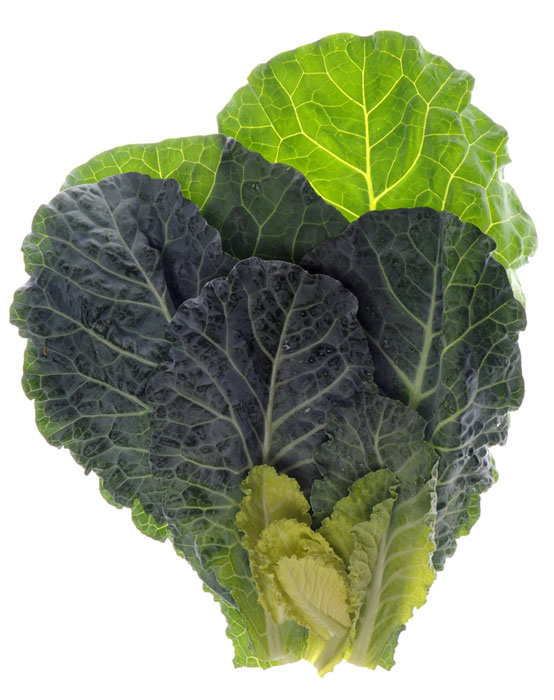
Hearty, earthy, and full of wholesome flavor, collard greens are a comforting staple in plant-based cooking. They can be sautéed, simmered into soups and stews, used as fresh wraps, or served alongside cozy Southern-inspired dishes. With their sturdy texture and nourishing qualities, collard greens add warmth, depth, and versatility to a wide variety of vegan meals.
The Health Benefits of Collard Greens
Collard greens are a loose-leafed cruciferous vegetable with a wealth of phytonutrients called glucosinolates, which are thought to fight cancer. This leafy green vegetable has also been shown to reduce cholesterol. One cup of raw collard greens contains only about 11 calories and is an excellent source of calcium, as well as vitamins A, C, and K. It’s also high in fiber.
How to Buy Collard Greens
When shopping for collard greens, look for beautiful green leaves without blemishes. Don’t choose wilted leaves.
How to Store Collard Greens
Collard greens can be sandy, so to clean before storing, submerge them in water to loosen any grit, then wash and dry. Store by placing them in a large zip-lock bag and refrigerating them. They should stay fresh for up to five days.
How to Prepare Collard Greens
Collard greens have a mild, somewhat smoky flavor on their own, but they take on other flavors quite well. For raw preparations such as salads and slaws, use the smaller, tender leaves and cut them into thin ribbons. The larger, more fibrous leaves are best for roasting, sautéing, or braising. Remove the woody stems, then cut or tear the leaves into bite-sized pieces before cooking. Collard greens are a staple in the U.S. for traditional African-American cuisine (soul food) and can add color, texture, and excellent flavor to soups and stews.
How Do Collard Greens Grow
Planted in late spring or early summer for fall or winter harvest, collard greens grow best in USDA zones 6 through 10, flourishing in temperatures ranging from 15°F to 85°F. They require consistent moisture in well-drained soil. A light frost enhances the flavor of collard greens.
Looking for more plant-based basics? Visit our Nutrition Guide.